Powered By


Powered By
Powered By
I am standing in line at a coffee shop. There is one person ahead of me. This person orders their coffee pays for it. Gets their coffee in thirty seconds.
Imagine walking into a coffee shop. There is no line. You step up to the counter, and the barista just stares at you for a few seconds without saying anything. Then they slowly reach for a cup… and pause again.
You would not wait long before walking out.
That is exactly how users feel when they land on a slow website.
In the real world, we might wait a minute or two. But online, even a delay of milliseconds can frustrate users. In 2026, website speed is not just a technical factor. It directly impacts your business, conversions and revenue.

Major studies from Google, Amazon, and Deloitte all agree on one thing: speed drives revenue.
This makes 3 seconds the danger zone for any website.
A 100-millisecond delay can reduce conversions by 7%.
If your website generates $10,000/month, a 1-second delay could cost you:
That is revenue lost purely due to slow performance.
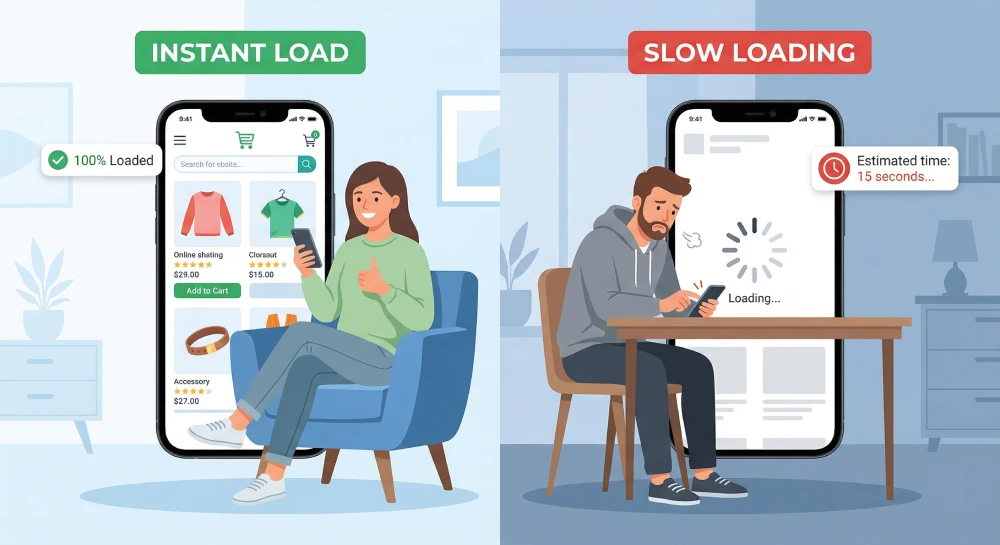
When users search online, they are often in problem-solving mode. This is known as “flow.”
If your website loads slowly, it breaks that flow. The user feels friction and frustration, and the easiest response is to leave.
Measures how quickly the main content loads. Target: under 2.5 seconds.
Measures responsiveness. Target: under 200 milliseconds.
Measures visual stability. Target: less than 0.1.
Most template-based websites struggle to meet these benchmarks.

Many websites use platforms like Wix, Squarespace, or pre-built WordPress themes.
These templates are built to work for everyone, which means they include a lot of unnecessary code.
This is called code bloat, and it slows your website significantly.
Custom-built websites are designed specifically for your needs, without unnecessary elements.

Consider two real estate agents:
A buyer searches for listings on their phone.
Agent A’s website loads slowly. The user leaves.
Agent B’s website loads instantly. The user clicks “Call Now.”
The difference? Just a few seconds — but it decides who gets the lead.
If your score is between 0–49, your website is likely hurting your conversions.
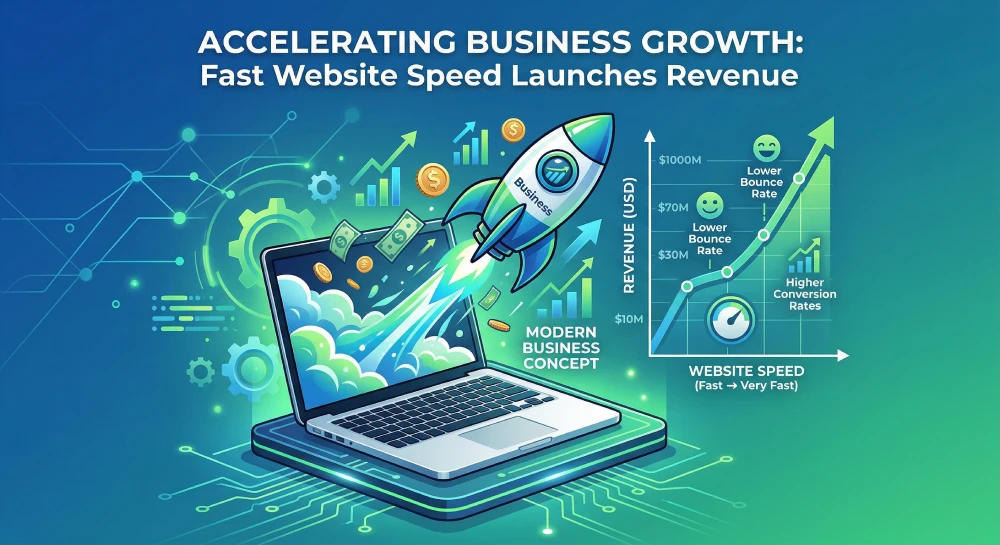
In a competitive market, businesses focus on pricing, marketing, and service.
But one of the simplest advantages is speed.
A fast website builds trust, improves user experience, and increases conversions.
It shows customers that you value their time.
Do not let slow performance cost you revenue.
Ready to improve your website speed?
Contact us today for a free speed audit and start turning visitors into customers.
Website speed directly affects user experience. A slow-loading site increases frustration, causing visitors to leave before completing a purchase, which lowers conversion rates.
Even a 1-second delay in load time can reduce conversions by up to 7%. For businesses generating consistent traffic, this can result in significant monthly and yearly revenue loss.
The ideal load time is under 2 seconds. Anything above 3 seconds is considered risky, as more than half of mobile users may abandon the site.
Slow websites increase bounce rate because users lose patience quickly. When a page takes too long to load, visitors leave without interacting, signaling poor performance.
981 Main St West, Hamilton, ON L8S 1A8, Canada.

Priyank Patel is the Founder & CEO of HRINFOCARE Limited. With over 20 years of experience in web development, software solutions, AI integration, SEO, and business automation, he has helped companies across Canada, the United States, and internationally build scalable digital solutions.
Unlike traditional agencies where consultations are handled by sales representatives, your strategy session is conducted directly by Priyank, providing practical business and technical guidance based on real-world experience.

