Powered By


Powered By
Powered By
Optimizing sites today means thinking beyond just Google. When machines start answering questions directly, pages must match what people actually seek. User needs shape everything now - navigation matters as much as answers. Fast loading earns trust before a single word is read. Standing out comes down to reliability built over time. Useful information ranks when systems notice it helps real queries.
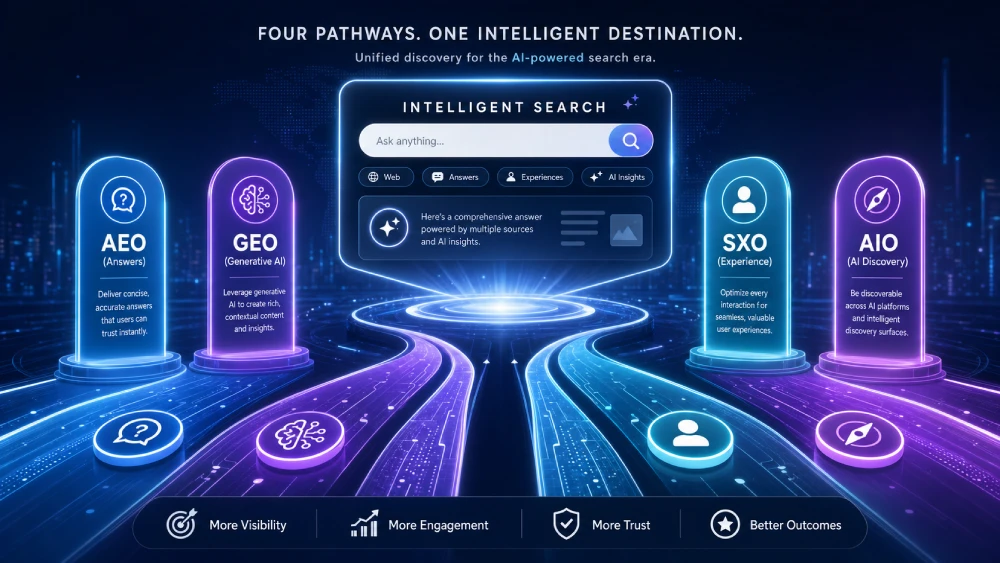
Focused on purpose, SEO shifts away from mere words. What people seek shapes the search landscape now. Instead of matching terms, it follows motivation. By 2026, success hinges on AEO (Answer Engine Optimization), GEO (Generative Engine Optimization), SXO (Search Experience Optimization), and AIO (AI Optimization). Each plays a role just as shifts unfold.
| Type | Purpose |
|---|---|
| SEO (Traditional) | Rank in Traditional Search Engines |
| AEO | Answers Questions Directly (Answer Engine Optimization) |
| GEO | Earn Citations From AI Search Systems (Generative Engine Optimization) |
| SXO | Enhance Search Experience and User Engagement |
| AIO | Optimize Content for AI Discovery |
Picture a site once topping Google for each term its creator wanted. Pages held almost no real content - just scraps of text here and there. Links arrived from shady networks, bulk listings, places selling rankings outright. Descriptions stuffed keywords until sentences broke apart. For some time, it actually succeeded. Visitors flooded in without pause. Calls didn’t stop coming. Work picked up steadily.
One day at dawn, it vanished. Not slipped down rankings - erased entirely from the listings. No official punishment showed up, no alert arrived. Without notice, the system shifted, leaving that site behind.
Most folks know this tale. Actually, following old-school SEO methods could leave you unaware of looming trouble. Truth is, search engine optimization today barely resembles its 2018 version. The distance grows daily between those adjusting and those stuck in place.
Years passed while people saw SEO as a hack - a way to trick Google into ranking their page, truth be told. Actually, those shortcuts did deliver results. Pack your text full of keywords and the system believed you mattered. Gather plenty of links, never mind where they came from, and higher ranks followed. Swap one strong page for ten shallow ones, suddenly visibility spread further.
Back then, most of the business world focused more on cracking Google's code than helping the person who searched. Instead of solving problems, companies chased rankings. Who really mattered? Not the visitor at the keyboard. The true customer sat unseen inside automated systems, shaping choices without saying a word.
| Old SEO Ways | New SEO Thinking |
|---|---|
| Keyword stuffing & density tricks | Search intent & topical relevance |
| Buying or trading backlinks in bulk | Earning links through genuine authority |
| Thin content published at volume | Word count matters less than depth and supportiveness |
| Exact-match anchor text manipulation | Natural language and semantic coverage |
| Duplicate pages targeting slight variants | Content that solves one problem really well |
| Top spot claimed, people's needs brushed aside | User experience as a ranking signal |
One step at a time, Google began targeting those tricks - Panda arrived first, then Penguin, later Hummingbird, each plugging yet another gap. Yet the real shift came when Helpful Content adjustments emerged alongside waves of machine-made junk online. The goal wasn’t merely blocking shady moves. A deeper aim took shape: lift up what truly helped people, stuff you could point to and say, “This works.” At last, detection caught up with intent.
One thought stands out when comparing today’s SEO to yesterday’s: it’s about what people mean, not just what they type. Forget the exact word - focus on why someone is searching. A shift happened quietly, moving beyond phrases toward purpose. What drives a query matters more than matching terms. The goal isn’t to mirror words but grasp meaning. Behind every search lies a reason waiting to be understood. Modern ranking hinges less on repetition and more on relevance to motive. Context shapes results now. Clarity of aim beats rigid keyword alignment. Purpose guides performance.
Picture a person searching for how to stop a dripping faucet. Not interested in purchasing gear just yet. Definitely not curious about pipe inventions from 1800s Europe. What matters is a straight path through steps - something doable, immediate. Clear guidance keeps them there, reading, perhaps saving the page later. But long chunks of repeated terms masked as help? That kind gets scrolled away fast. The search engine sees that too.
"Google doesn't rank pages anymore. It ranks answers. The question is whether your content is the best one available for the specific question being asked."
Nowadays, keyword research does something entirely new. Instead of scattering words across webpages, people look through them to see what customers really want during each step they take. Questions seeking knowledge appear first. Then searches aiming to find specific sites pop up. Later, comparisons before buying begin showing. Finally, actions ready to purchase emerge clearly. Every type demands unique content shaped exactly for it. Matching those needs precisely becomes how actual progress in search rankings happens by 2026.
Most of what you see online gets sorted quietly behind the scenes. Google built its Helpful Content system to spot pages made for readers versus those chasing clicks. Pages that feel written by a real person tend to stay visible. Those shaped only around keywords often drop lower. The main thing it checks: does this help anyone, or just aim at ranking? Useful stuff tends to rise. Stuff focused on tricks usually fades.
Truth is, most overlook how deep this goes. Writing like someone who truly knows their stuff changes everything - no checklist tricks, no chasing phrases just because they’re trendy. When the answer isn’t what fits best on a brochure, honesty pulls more weight than promises. A visitor lands, reads, leaves with insight tucked under their arm - not a sense they were cornered into clicking. Real value doesn’t shout; it stays quiet long after the screen fades.
Length won’t win if clarity loses. Hitting the exact answer fast beats circling a subject slowly - no matter how many words fill the space. Success shows up when the reader finds their solution right away, not after wading through layers of almost-there. Relevance rules more than volume ever could.
Most times, diving deep into a subject shows you know it inside out. Think of it like this: when a site keeps coming back to one theme, exploring different sides again and again, something shifts. Slowly but surely, search engines start seeing it as someone worth listening to. Not because of one flashy article that got attention once. It happens through steady work - clear writing, smart structure, regular updates - all piling up into something solid.
Hidden behind every top result sits a foundation few notice. Without access, even genius stays unseen by search engines. Crawling matters just as much as creativity. Understanding follows structure, not slogans. What gets ignored often shapes success more than what's shared online. Fixing silent errors beats chasing trends. Attention goes elsewhere while gaps widen beneath. Solid groundwork rarely makes noise.
One way or another, by 2026 tech-focused SEO involves many moving parts. Google now treats Core Web Vitals - its method for judging user experience on a page - as actual ranking inputs, not optional extras. Should loading exceed three seconds on an average mobile device, positions drop while visitors slip away at the same time. How fast things appear matters. So does whether elements jump around unexpectedly. Even how soon buttons respond plays a role here.
These days, mobile comes before everything else. What shows up on phones gets indexed by Google ahead of desktop versions. When the phone layout feels off, slow, or mismatched compared to the computer page, search results notice. Rankings shift based on how well the small screen works.
Fixing how pages connect inside a site matters more than ever. Think of schema tags and organized data like quiet signals helping search engines understand content better. When setup right, those choices keep working long after. Canonicals guide where attention should go. Managing what gets crawled shapes visibility slowly over time. Done well, none need constant fixing.
Once, UX and SEO lived in separate worlds. Designers shaped the look and experience while rankings belonged to another group. Now? That boundary barely exists. Gone. Blurred into something shared (Search Experience Optimization).
What keeps Google sharp is its knack for spotting real user satisfaction. Not merely if a site follows rules, yet whether visitors stick around, dig in, then leave fulfilled instead of hitting back fast to pick another link. Time spent reading matters. So does the rhythm of exits and returns, along with how often searchers choose your result first. These actions quietly shape how Google sees each page across weeks and months.
Your UX moves shape SEO outcomes. When pages feel messy and tough to scan, search engines notice. Popups that jump up right at entry? They ding visibility too. If finding connected info feels like a maze, rankings take a hit. How visitors move through your site ties directly into search performance. Each design call subtly feeds into discoverability now.
True, backlinks haven’t lost their weight. Saying they’re irrelevant keeps popping up, yet it’s never been accurate. One nod from a trustworthy site tied to your topic? That still holds serious sway with Google. Here’s the twist: chasing endless links without care used to work - today, it drags rankings down instead.
Getting a hundred backlinks from weak, unrelated websites does little for search ranking - sometimes even invites human review. A single mention from a respected source in your field might shift things noticeably. Focus slides naturally away from collecting links toward producing work worth citing by peers nearby.
Harder to answer, sure. Creating real work matters here - fresh findings, say or a tool people truly need, maybe a thorough walkthrough that ends up topping every list on its subject. Yet these are the connections that grow stronger with time, surviving each new tweak online, building the sort of standing that pulls visitors steadily, turning clicks into lasting results.
One moment you’re clicking around, next thing there’s no lag - pages open before your finger lifts. That kind of speed feels natural when everything fits screens big or small without fuss. Navigation slips into place almost by instinct, paths clear but never forced. Content appears exactly when needed, not earlier, not later, shaped around questions unspoken yet answered anyway. Authority grows quietly here, not shouted, earned through steady clarity instead of noise. Each piece adds up without counting them out loud.
What stands out is how this company seems to have quit chasing search rankings, now focusing instead on truly addressing what its customers want to know.
Here’s the change. Not about tools or tech - more like a new way of thinking. Yet companies that truly absorb this idea, instead of swapping methods but holding on to outdated beliefs, slowly build steady search visits over time. While others rush to react whenever Google tweaks its rules, confused by yet another setback.
Outsmarting machines used to be the goal. Helping people matters more now. Turns out, Google can spot which one you're really doing.
Stop chasing outdated algorithms. Let's build a search strategy focused on real user intent, technical excellence, and the future of AI search.
Absolutely - arguably more so than ever. Paid ads have become increasingly expensive across most industries, which means organic traffic carries a better long-term ROI for businesses that commit to it. The catch is that results don't come overnight. A small business that starts building real content authority now will be in a dramatically stronger position twelve months from now than one that waits. The barrier to entry is effort and consistency, not budget - which actually levels the playing field for smaller players against larger competitors.
The honest answer is: it depends, but you should generally plan for a three-to-six month runway before seeing meaningful movement on competitive keywords. Technical fixes like improving page speed or fixing crawl errors can show results faster - sometimes within weeks. New content targeting low-competition, specific queries can rank in four to eight weeks. Building the kind of topical authority that moves the needle on your main commercial terms takes longer - typically six to twelve months of consistent effort. Anyone promising you page-one rankings in thirty days for competitive terms is selling something you should be sceptical of.
Not automatically - but it very often does in practice. Google's position is that it doesn't penalise AI-generated content as such; what it penalises is low-quality, unhelpful content regardless of how it was produced. The problem is that most AI-generated content, when published without meaningful human editing, tends to be generic, shallow, and devoid of the real expertise and perspective that Google now rewards. If you use AI as a drafting tool and then genuinely enrich and edit the output with your own knowledge and experience, the result can be perfectly fine. If you publish raw AI output at volume hoping to flood search with thin pages, you're building on sand.
Topical authority is Google's assessment of how comprehensively and reliably a website covers a particular subject. A site that has thirty well-written, interconnected articles covering every meaningful aspect of, say, home renovation - from budgeting to specific trades to project management - will outperform a site that has one great article on the same topic, even if that single article is excellent. You build topical authority by mapping out all the questions, sub-topics, and angles your audience cares about, then systematically creating content that covers each one. The key is depth, internal linking between related pieces, and consistency over time - not breadth across too many unrelated topics.
981 Main St West, Hamilton, ON L8S 1A8, Canada.

Priyank Patel is the Founder & CEO of HRINFOCARE Limited. With over 20 years of experience in web development, software solutions, AI integration, SEO, and business automation, he has helped companies across Canada, the United States, and internationally build scalable digital solutions.
Unlike traditional agencies where consultations are handled by sales representatives, your strategy session is conducted directly by Priyank, providing practical business and technical guidance based on real-world experience.

