Powered By

Powered By
Powered By
You've got a solid business, skilled services, maybe even loyal clients - yet how’s your site holding up?
You could own the prettiest, most convincing site in your field - yet if it loads in five, maybe four, or even three seconds flat, plenty of would-be visitors won't stick around to check it out.
They'll tap, hang around, grow annoyed - then bail.
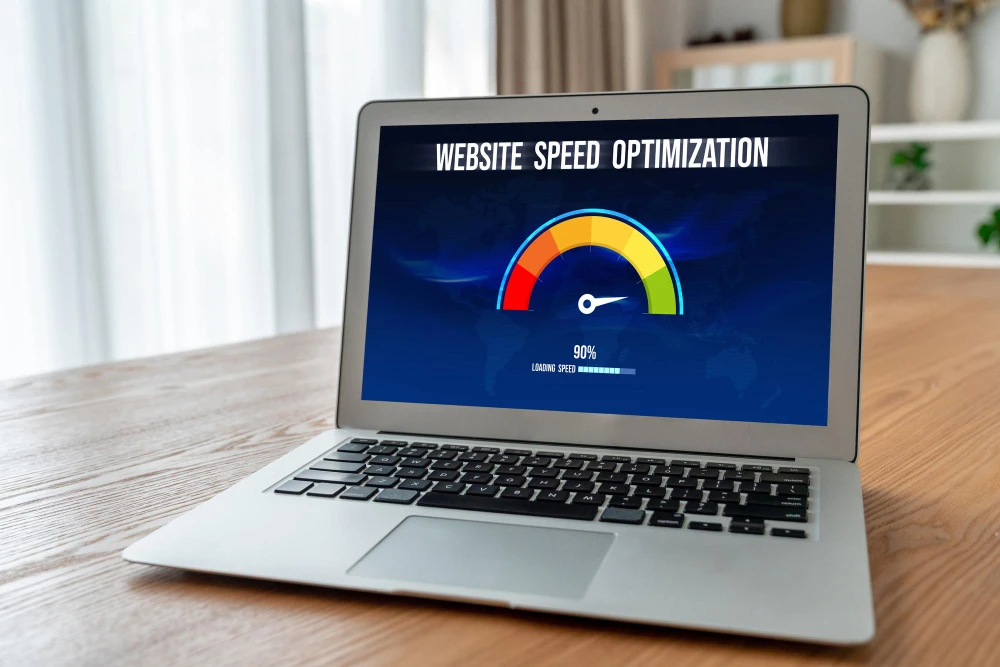
In 2025, fast websites aren't just a bonus tweak. They're essential - hitting your profits hard, shaping how high you show up online, or hurting how people see your name.
Every split second matters - here's why things drag, also how we speed them up.

Think less about quick or slow - see time more like money instead.
You lose customers - Google says 53% of people on phones leave if pages don't open within 3 seconds. More than half your chances disappear before you get to speak.
Your sales start vanishing - right away. A slow site hits profits hard. Just one second of delay? That's enough to slash conversions by 7%. Research proves it happens every time. Making $100,000 yearly online? Then that tiny wait burns $7,000 straight out of your pocket.
Your brand seems sketchy when your site drags - users get annoyed, sure, but they also think you're disorganized. When pages stall or glitch, folks assume your whole operation runs that way too. Most people, around three out of four, decide if they trust a company just by how the website works. If it's sluggish, their confidence tanks fast.
People aren't the only ones annoyed by sluggish websites - Google's also frustrated.
Google wants folks to enjoy using it. Yet a sluggish site feels annoying.
To check this, Google relies on something known as Core Web Vitals (CWV). They reflect actual user experiences by tracking how fast your site loads, responds, or shifts visually. Since 2025, these vitals directly affect where you rank on Google - no exceptions.
This means when your site takes time to load, Google pushes quicker rivals higher - no matter how solid your info is. It's not only about visitors who click through; it's those who never reach you at all.

The issue for many small companies isn't just one thing. Instead, it's often tied to three main problems - frequently seen when people use do-it-yourself tools or bargain website deals.
Bloated Templates & Code: DIY site tools - think Wix or Squarespace - or basic WordPress setups aim to fit everyone, so they pack in tons of extra code, add-on junk, and background tasks you'll never need. That clutter? It's the top reason sites crawl. Instead of clean builds, you get overloaded frameworks dragging performance down.
A big, untouched image? Yeah, that gorgeous shot on your front page could be around 5MB. So when someone clicks in, their phone or laptop's gotta pull every single chunk before showing anything. Skip smart shrinking - no compression, no WebP - and you're basically tossing weights into the webpage. Those files just sit there, slowing everything way down.
A budget-friendly, sluggish web host? Lots of companies go for low-cost shared plans to cut expenses. Think of it as renting a room in a packed complex - walls are super thin. If another site on that server suddenly gets tons of visitors, it hogs the power. Your page then drags its feet loading anything.
You can't just add speed later. For a site that's actually quick, performance needs to start at the base - right from day one.
This is central to what we do at ItsProWebsite - instead of merely patching up sluggish websites, we create speedy ones right from scratch.
We build fully custom sites - each one's designed from scratch, so your website runs on lean, purpose-built code. No extra junk from templates slowing things down. That way, you get a smooth, nimble base that loads quick.
We offer reliable, speedy hosting - our 'free hosting and support' isn't basic shared setup. Instead, it's a safe, quick, hands-taken-care-of space. Our team manages server tuning to keep your site running smooth and locked down, finally fixing the noisy neighbor hassle.
We're set up for search engines right away - since fast is built in, your site hits Google's speed rules from day one. Not something tacked on later… it just comes with the deal.
A sluggish site could quietly wreck your sales. Folks browsing online? They'll just leave.
Curious about a site that's just as sharp and quick as your work? Take a look at our complete web packages.
Website speed directly affects user experience, conversions, and trust. If a site takes longer than 3 seconds to load, many users leave without interacting, which results in lost leads and revenue.
Faster websites convert better because users can access content quickly. Even a one second delay can reduce conversion rates significantly, especially for eCommerce and service based websites.
Yes. Google uses page speed and Core Web Vitals as ranking factors. A slow website can struggle to rank well, even if the content is strong, while faster sites are rewarded with better visibility.
Ideally, a website should load in under 3 seconds on both desktop and mobile. For competitive industries, loading times closer to 1 to 2 seconds perform best.
981 Main St West, Hamilton, ON L8S 1A8, Canada.

Priyank Patel is the Founder & CEO of HRINFOCARE Limited. With over 20 years of experience in web development, software solutions, AI integration, SEO, and business automation, he has helped companies across Canada, the United States, and internationally build scalable digital solutions.
Unlike traditional agencies where consultations are handled by sales representatives, your strategy session is conducted directly by Priyank, providing practical business and technical guidance based on real-world experience.




