Powered By


Powered By
Powered By
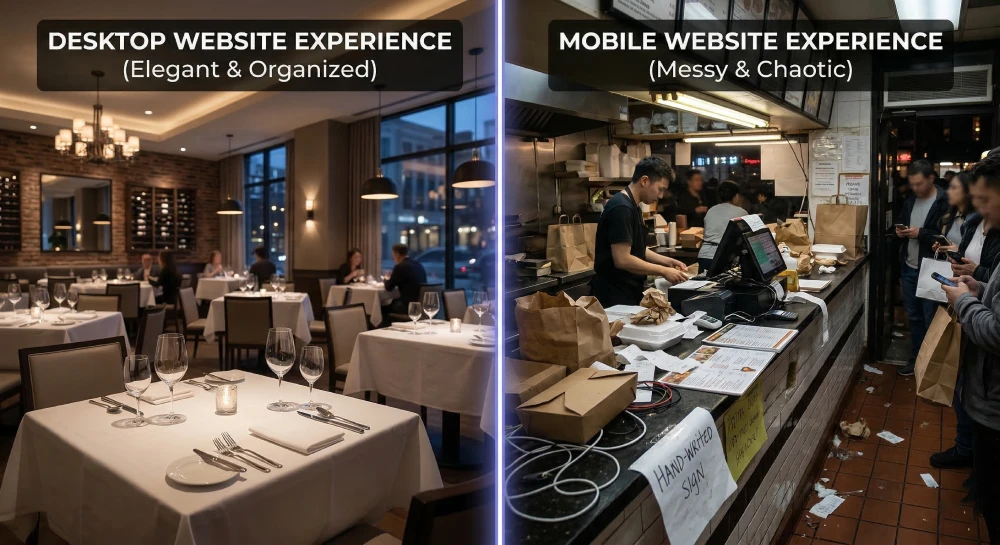
I have a restaurant. I put a lot of money into making the dining room look nice. I got these fancy velvet curtains and some beautiful mahogany tables. The room also has some crystal chandeliers. My restaurant looks really great. The dining room at my restaurant is very pretty with all these things in it. My restaurant has a lot of things, like the velvet curtains and the mahogany tables and the crystal chandeliers.
So you think everything is going great. Then you find out the food critic from the Michelin Guide did not even come into the dining room. The Michelin Guide food critic is the one person who gets to decide if you get a star. The Michelin Guide food critic did not do that. The Michelin Guide food critic walked around to the back of the place. They looked at the takeout window. What did the Michelin Guide food critic see? The Michelin Guide food critic saw a counter that was a mess. The light above the counter was flickering. The Michelin Guide food critic based their whole review on that.
In the world of the internet, Google is the food critic. Your "Dining Room" is your Desktop website. Your "Takeout Window" is your Mobile website.
For a time, Google looked at the Desktop version of websites. Now things are different. These days Google uses Mobile-First Indexing. This means Google mostly looks at the mobile version of the content when it is deciding how to index and rank Google search results. Google is using the mobile version of the content to do this because Google wants to make sure people have a good experience when they search for things on their phones.
If you own a business, you are sitting in your office looking at your website on a big computer screen, and you think your website looks really good, you might be wrong. Your website is what people see when they look for your business online, so your website is your business to these people. You need to think about how your website looks to them, not how it looks to you when you are sitting in your office looking at your website on a 27-inch monitor.
The reason your mobile site is really important for your business to grow in 2026 is that more and more people are using their phones to browse the internet. Your mobile site is the one that will help you reach these people. You need to make sure your mobile site is good and easy to use so people can find what they are looking for. Your mobile site is key to your success in 2026.
To figure this out, we need to see how Google works. We have to look at what Google does and how it does it.
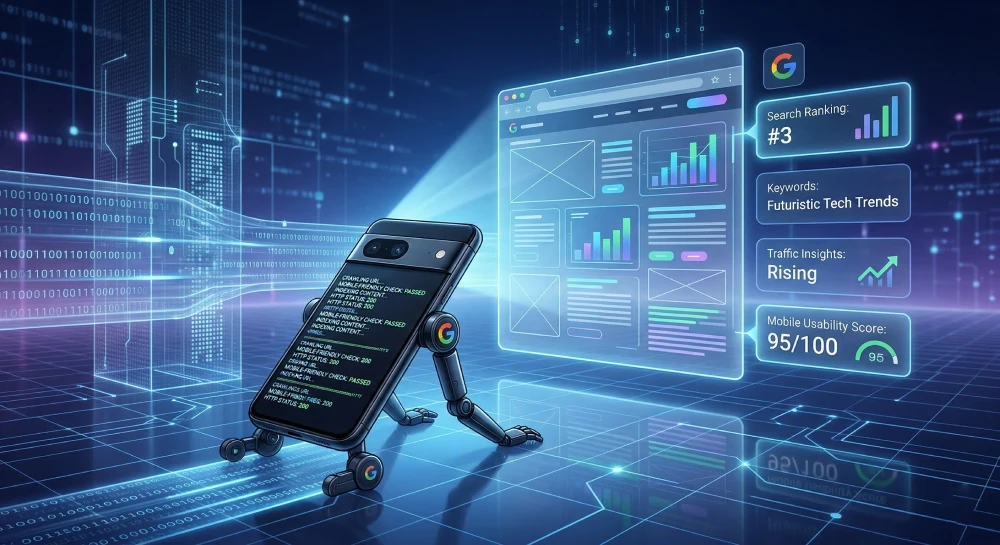
Google uses these things called spiders or bots to look at the internet. Google sends these spiders or bots to crawl the internet. They read the code on your website to figure out what your website is about. They ask questions, like: does this website sell shoes, or is it a place where lawyers work? They also want to know where your website is located.
In the past, the Googlebot was like a computer on a desk. The Googlebot would look at your website like it was on a laptop. Now, when the Googlebot looks at your website, it is not like it is on a laptop; it acts like a smartphone.
Google saw a change in the way people were using the internet. Google found out that by 2025, it will get over 60% to 70% of all search traffic from smartphones. It did not make sense to Google to rank websites based on how they looked on a computer when most people were using phones.
Now Google uses the Smartphone Googlebot to look at your website before anything else.
The Golden Rule: If the Google website checker looks at your website on a phone and it has less stuff on it than it does on a computer, then Google does not see that extra content. If your website is really slow when people look at it on their phones, but it is fast on a computer, then Google thinks that your website is slow.
Your desktop site is now secondary. It is just an "alternate" view. The mobile site is the primary source of truth.
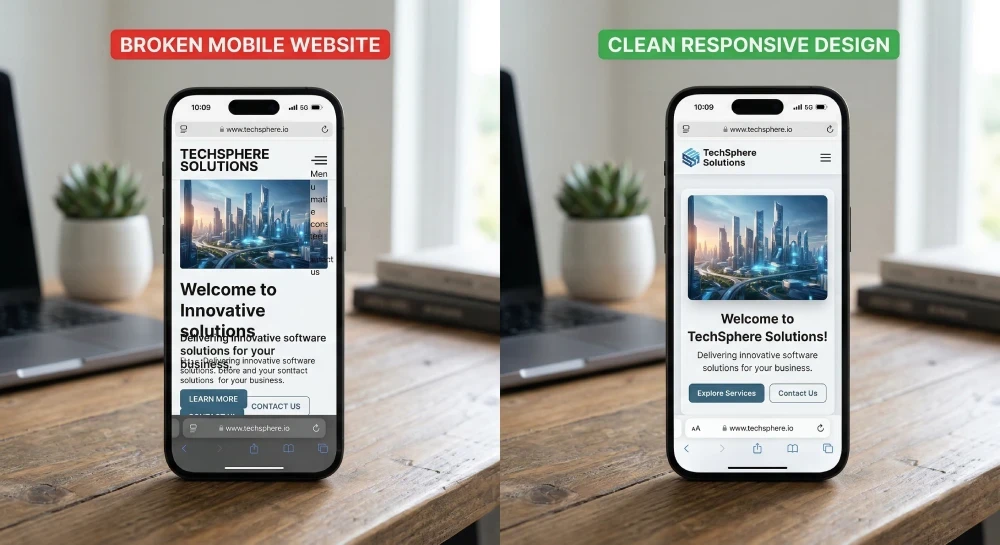
The thing about the Desktop Illusion is that it can really hurt your sales. The Desktop Illusion is when you think your website looks great on your computer, but it does not look that good on other devices. People often look at websites on their phones or tablets. If your website does not look good on those devices, they will not buy from you.
This is the mistake that we see the most at ItsProWebsite. A client comes to us and says, "I do not understand why my website is not ranking high in search results. My website looks really beautiful." We open their website on a laptop. The website looks great. It has pictures, lots of movement and animations, and a sidebar full of testimonials.
So we get out the iPhone.
Google does not see those testimonials because of Mobile-First Indexing. If those testimonials are not on the mobile version, then Google thinks they do not exist. If you have important words or services that people cannot see when they look at your website on their phone, then you are basically not visible to anyone. It is like you are talking loud, but nobody can hear you.
What does Google actually look for when it comes to websites? It is not just about making sure the website fits on the screen. Google looks for things that make a website easy to use, which is what Google calls Usability. Google wants to know if people can use a website without getting frustrated.
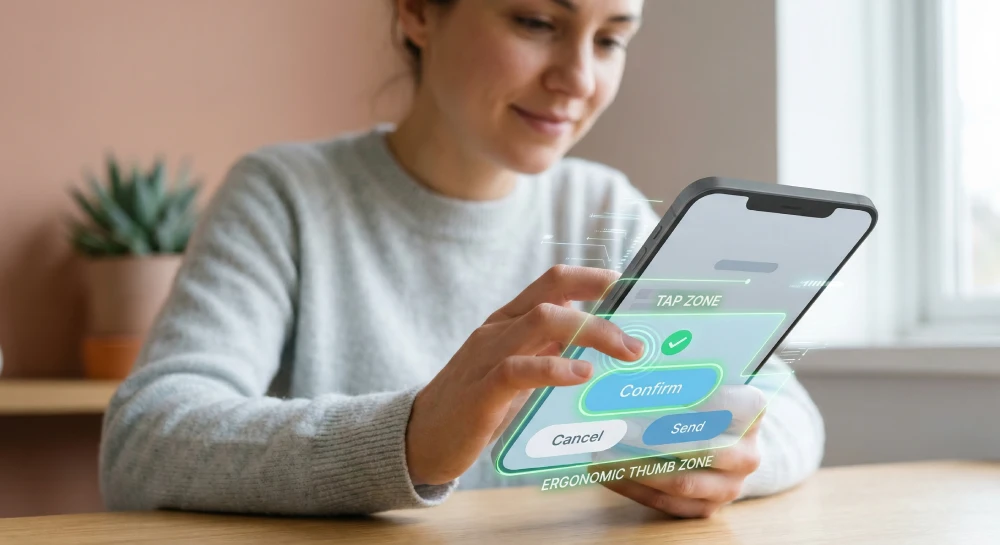
So you are trying to click on a link on your phone, and your finger keeps hitting the link that is right below it. This is what people call a Tap Target error. Google actually looks at how far apart the buttons are on a webpage. If the links on your webpage are too close to each other, Google will penalize you.
The rule is that buttons need to be big enough so you can tap them with your thumb. They should be at least 48x48 pixels and have some space between them.
If someone has to use the pinch-to-zoom thing on their phone to read your writing, that is not good. Font sizes need to be changed for phones so people can read them easily.
Our team at ItsProWebsite uses something called Fluid Typography. This means the size of the text changes automatically when you look at it on different devices, getting bigger or smaller depending on how wide the screen is.
Mobile networks like 4G and 5G are not always as reliable as the fiber optic cable in your office. Sometimes a website will load quickly on WiFi, but on a 4G connection, it can take up to ten seconds if the website is heavy.
Google's Core Web Vitals metrics are used to measure how fast the largest element on a website paints on the screen. If your mobile site is slow and takes more than 2.5 seconds to load the main content, your mobile site rankings will go down. You have to make sure your mobile site loads fast, or else you will get penalized.
In the days around 2012, companies would make two separate websites: www.example.com (Desktop) and m.example.com (Mobile).
Do not do this in 2025. "M-dot" sites are really bad because you have to update the content in two places. Often the "m" site is a "lite" version of the real website. If you have a "lite" version of the website, Google thinks your business listing is also a "lite" version.
The winner is Responsive Web Design. This is what we do at ItsProWebsite.
This makes sure that all of your content is available to Google no matter what device people use. The goal is to give our customers mobile perfection.
When you sign up for our $49/month Starter Plan, this is the checklist we use for your custom site:
Why is this doubly important for local businesses like plumbers, dentists, or cafes?
People do "Near Me" searches on their phones because they usually need something right away. Nobody sits at their desk to search for a "tow truck near me." They are standing on the side of the road with their iPhone. When people search for a "pizza place open now," they are doing it from their car.
If your website is not working well on phones:
A non-responsive site is basically blocking customers from calling your company.

The internet is not something we visit on a computer anymore. It is a layer that is always there, right on top of our everyday life, accessible through the phone in our pocket. Google has changed everything about the way it works to reflect this reality.
You do not need to know all about media queries and viewport settings. You just need someone who does. At ItsProWebsite, every single website we launch—from our Starter Plan to our Pro Plan—is completely optimized for mobile devices.
Is your website failing the mobile test? Pull it up on your phone right now. If you have to pinch, zoom, or squint, it’s time to call us.
Get Your Mobile-Optimized Site in 7 Days
Mobile-first indexing means Google primarily uses the mobile version of your website to crawl, index and rank your content in search results.
Since most users browse on mobile devices, Google prioritizes mobile-friendly websites. A poor mobile experience can negatively impact your rankings and visibility.
If your mobile site is slow, hard to navigate, or missing content, Google may rank your website lower, leading to reduced traffic and fewer conversions.
Yes, responsive design is recommended because it uses a single website that adapts to all screen sizes, ensuring consistency and easier maintenance.
981 Main St West, Hamilton, ON L8S 1A8, Canada.

Priyank Patel is the Founder & CEO of HRINFOCARE Limited. With over 20 years of experience in web development, software solutions, AI integration, SEO, and business automation, he has helped companies across Canada, the United States, and internationally build scalable digital solutions.
Unlike traditional agencies where consultations are handled by sales representatives, your strategy session is conducted directly by Priyank, providing practical business and technical guidance based on real-world experience.

