Powered By


Powered By
Powered By
If you have a business that provides services like being an emergency plumber or a mobile detailer or a landscaping crew then you really depend on one kind of search that people do on Google. This search is very important for a service-based business, like an emergency plumber or a mobile detailer or a landscaping crew.
It isn't “Best Plumber in the World.” It isn't “History of Plumbing.” It is simply “Plumber Near Me.”
In digital marketing, this is called a high-intent transactional search. When someone types “near me” into a search engine, they are not casually browsing. They are actively trying to solve a problem right now. Often, they are ready to hire someone immediately.
These users typically have their phone in hand, their problem in front of them, and they want the fastest solution available nearby.
According to research from Google, searches that include “near me” have grown dramatically over the past few years. In fact, these types of searches increased by more than 900%. This means that more people than ever are using search engines to find local services close to their location.
If your website is not optimized to capture these searches, you are not simply missing website visitors. You are handing potential customers directly to your competitors.
To rank for these searches, you must first understand user intent.
Most “near me” searches happen on mobile devices. People use their phones to quickly find a nearby service when they need help immediately.
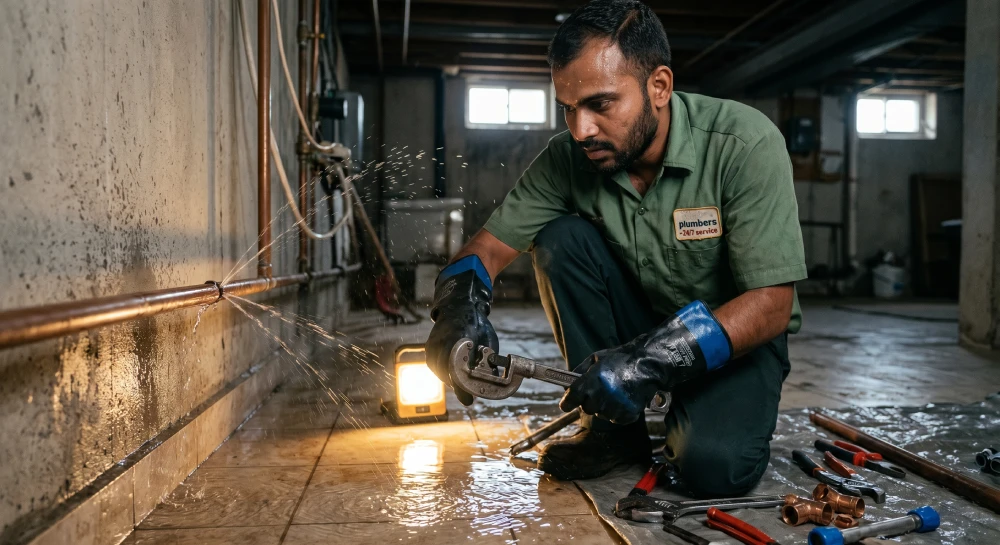
Imagine this scenario: You walk into your basement and suddenly notice water on the floor. A pipe has burst and water is leaking everywhere. At that moment, you are not searching for plumbing history or the top plumber in the country.
You take out your phone and search:
“Emergency plumber near me.”
Google understands this intent. Its algorithm prioritizes businesses that are geographically close and appear trustworthy. Even if a plumber with a great website is located 40 minutes away, Google is more likely to show a plumber located just five minutes away.
Restaurants and storefront businesses often have an easier time appearing in local search results because they have a physical address that can be displayed on a map.
However, many service businesses do not operate from a public storefront. Examples include:
These businesses typically work from home or a garage and travel to customers instead of receiving customers at their location.
This type of company is known as a Service Area Business.
Years ago, some businesses tried to rank by stuffing keywords like “plumber near me” repeatedly throughout their website. Today, this tactic can actually hurt rankings.
Modern local SEO requires a smarter strategy.
Your Google Business Profile should be configured as a Service Area Business.
If you do not want customers visiting your home location, you can hide your physical address while still defining the areas you serve.
For example:
This helps Google understand where your business operates.
If your website only states that you serve an entire city, it may not rank well for specific neighborhoods.
Instead, create pages targeting specific areas.
Each page should include local references, neighborhoods, and relevant information about the area.
This creates strong hyper-local signals that search engines use to match your business with nearby users.
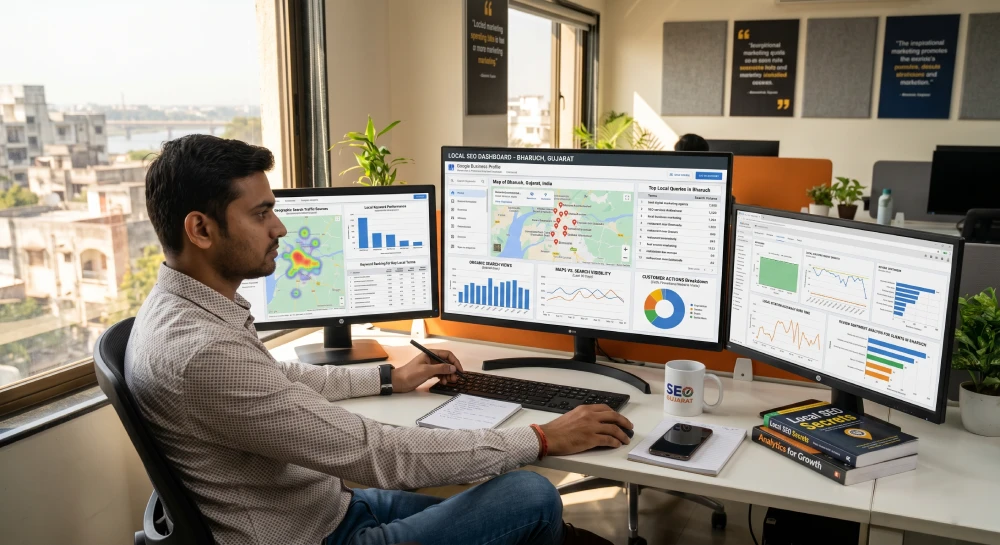
The footer of your website should clearly state the areas you serve.
Example:
Serving Mississauga, Brampton, Oakville, Milton, and surrounding Peel Region communities.
This information reinforces your service area across every page of your website.
Customer reviews are a powerful ranking factor for local search.
Encourage customers to include the city or neighborhood in their review.
Example review:
“Excellent furnace repair service in Oakville. The technician arrived quickly and fixed our heating problem the same day.”
When search engines see location names in reviews, they connect your business with that location.
Structured data plays a major role in local SEO.
Using LocalBusiness Schema, developers can embed geographic coordinates (latitude and longitude) directly into the website’s code.
This tells search engines exactly where the business operates and which municipalities it serves.
Schema markup helps search engines interpret your website content more accurately, improving your chances of appearing in local search results.
One of the best things about “near me” searches is that they level the playing field.
Large national brands may have bigger marketing budgets, but proximity still matters.
If your service vehicle is two miles away and a national competitor is ten miles away, your business has a strong chance of appearing higher in search results.
This makes local SEO one of the most powerful tools available to small service businesses.
You do not need to be the best in the world. You simply need to be the best option nearby.
“Near me” searches bring customers who are ready to hire immediately. These searches often lead to new business within hours.
If your website is not optimized for the areas you serve, potential customers in your neighborhood may never find you.
By structuring your website with proper location pages, strong local signals, and structured data, you can turn “near me” searches into real customers.
If your business serves multiple areas and you want to improve your local search visibility, contact our team to help structure your website for stronger local rankings.
“Near me” searches are location-based queries where users look for services or businesses close to their current location. Search engines use GPS data, IP addresses, and location signals to show nearby results that can quickly solve the user’s problem.
These searches usually come from users who need a service immediately. Because the search intent is high, people who search for services like “plumber near me” or “electrician near me” are much more likely to become paying customers.
To rank for “near me” searches, businesses should optimize their Google Business Profile, create location-specific pages on their website, collect local customer reviews, and implement LocalBusiness schema markup for better search engine understanding.
A service area business is a company that travels to customers rather than operating from a public storefront. Examples include plumbers, electricians, home cleaners, HVAC technicians, and mobile mechanics.
981 Main St West, Hamilton, ON L8S 1A8, Canada.

Priyank Patel is the Founder & CEO of HRINFOCARE Limited. With over 20 years of experience in web development, software solutions, AI integration, SEO, and business automation, he has helped companies across Canada, the United States, and internationally build scalable digital solutions.
Unlike traditional agencies where consultations are handled by sales representatives, your strategy session is conducted directly by Priyank, providing practical business and technical guidance based on real-world experience.

